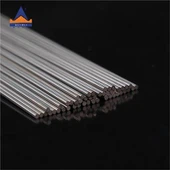
Carbide rods, primarily composed of tungsten carbide, are engineered materials known for their exceptional hardness, wear resistance, and durability. They are produced through a process that combines tungsten and carbon at high temperatures, resulting in a dense and robust material suitable for various industrial applications.
Key Features:
High Hardness: Carbide rods possess a hardness comparable to diamonds, making them ideal for cutting and drilling applications.
Wear Resistance: Their resistance to wear and abrasion extends the lifespan of tools and components, reducing the frequency of replacements.
Thermal Stability: Carbide maintains its properties at high temperatures, making it suitable for high-speed machining and harsh environments.
Corrosion Resistance: Many carbide formulations exhibit good corrosion resistance, further enhancing their longevity in challenging conditions.
Applications:
Cutting Tools: Used in manufacturing drills, end mills, and inserts.
Mining and Drilling: Essential for drill bits in oil, gas, and mining operations.
Wear Parts: Employed in machinery components that experience high wear.
Industrial Machinery: Integral in various equipment requiring durable components.
Aerospace and Automotive: Utilized in high-performance applications like turbine blades.
Medical Devices: Found in instruments requiring sharpness and durability.
Tooling and Molds: Used in molds for plastic and metal forming.
Conclusion:
Carbide rods play a crucial role in modern manufacturing and industrial processes, offering unmatched performance characteristics that enhance productivity and efficiency across various sectors. Their unique properties make them an essential material in industries demanding precision and durability.