Titanium alloys are widely used in various industries, including aerospace, automotive, and medical, due to their excellent strength-to-weight ratio, corrosion resistance, and biocompatibility. However, machining titanium alloys presents unique challenges that require careful consideration of the material's properties and the selection of appropriate machining grades.
Understanding Titanium Alloys
Titanium alloys can be categorized into three main types:
Alpha Alloys: These alloys are primarily composed of titanium and exhibit good weldability and ductility. They maintain strength at elevated temperatures but are generally less machinable.
Beta Alloys: These contain a significant amount of beta stabilizers, making them more machinable than alpha alloys. They offer higher strength and better toughness.
Alpha-Beta Alloys: These alloys combine the properties of both alpha and beta types, offering a balance of strength, ductility, and machinability.
Difficulties in machining titanium alloys
Titanium alloys are widely used in aerospace, automotive, and medical fields due to their excellent strength, lightweight, and corrosion resistance. However, there are many challenges in machining titanium alloys. Here are some of the main difficulties in machining titanium alloys:
1. High strength and hardness
Challenges: The high strength and hardness of titanium alloys make the cutting process more difficult and easily cause tool wear.
Impact: Highly wear-resistant cutting tools are required and may increase machining costs.
2. Low thermal conductivity
Challenges: The low thermal conductivity of titanium alloys makes it difficult to quickly dissipate the heat generated during the cutting process.
Impact: Excessive temperature can cause tool failure and workpiece deformation, affecting machining accuracy.
3. High toughness
Challenges: The high toughness of titanium alloys can easily cause adhesion and plastic deformation of the tool during cutting.
Impact: This can cause wear on the cutting edge and tool breakage, reducing machining efficiency.
4. High cutting force
Challenges: Titanium alloys require large cutting forces during cutting, which increases the burden on the machine tool.
Impact: It may cause damage to the machine tool or reduce machining accuracy.
5. High surface quality requirements
Challenge: The final product of titanium alloy usually requires higher surface quality.
Impact: Additional finishing is required after roughing, which increases the processing cycle and cost.
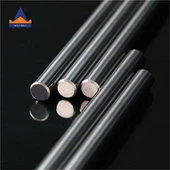
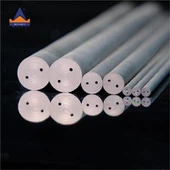
To solve these difficulties, Kunrui developed the KU25T grade tungsten carbide rod, which has high red hardness and toughness, especially used for roughing titanium alloys, and increases the service life by at least 30% compared with traditional grades.

Kunrui has specialized in producing tungsten carbide rods for over 15 years. We have a well-trained team of production and sales, which can help you find the right product and save your cost.
Welcome to contact us for inquiries or questions.
E-mail: info@zzkrhj.com