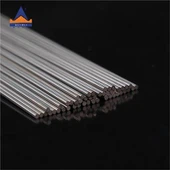
Cemented carbide rods (Or tungsten carbide rods) are materials widely used in industrial sectors; their quality and reliability are crucial for ensuring engineering safety and product quality. The following outlines how to assess the quality and reliability of carbide rods.
First, evaluating the quality and reliability of cemented carbide rods requires examining their material composition. Cemented carbide is a composite material formed by combining hard metal particles-typically carbides or nitrides-with a cobalt alloy binder that enhances toughness and ductility. Consequently, the content and ratio of these constituents are key factors influencing the rod's performance. Generally, a higher content of hard particles results in greater hardness but reduced toughness. Therefore, the quality and reliability of the rods can be assessed by analyzing their chemical composition and comparing the results against established standards.
Second, the structure and microstructure of the cemented carbide rods are also critical factors affecting quality and reliability. The alloy's structural features include solid solutions, precipitated phases, and intermetallic compounds. During the manufacturing process, heat treatment parameters and cooling rates must be strictly controlled to ensure a uniform, fine microstructure with consistent particle size and distribution. Inspection techniques such as metallographic microscopy and scanning electron microscopy (SEM) allow for the observation of grain size and phase distribution, thereby enabling an assessment of the material's quality and reliability.

Furthermore, the mechanical properties of cemented carbide rods are a critical aspect in evaluating their quality and reliability. Generally characterized by high hardness, high strength, and superior wear resistance, these rods find extensive application across various industrial sectors. Mechanical testing-including tensile, hardness, and bending tests-allows for the determination of key metrics such as ultimate strength, yield strength, and elongation. These data serve to assess the material's quality and reliability, as well as the alloy's strength characteristics and scope of application.
Finally, manufacturing processes and operational conditions also influence the quality and reliability of the rods. Cemented carbide rods typically undergo multiple processing stages, such as forging, milling, and cutting. During these operations, it is essential to preserve the alloy's mechanical properties and structural integrity while strictly controlling the processes to ensure the final product's quality and reliability. Additionally, as these rods may be subjected to demanding environments-such as high temperatures and pressures-during service, their quality and reliability must be evaluated with specific operational conditions in mind.
In summary, assessing the quality and reliability of cemented carbide rods requires consideration of factors such as material composition, structure and microstructure, mechanical properties, manufacturing processes, and operational conditions. Through chemical composition analysis, metallographic examination, mechanical testing, and an evaluation of processing and usage conditions, a comprehensive assessment can be made to ensure the safety and reliability of these rods in industrial applications.